
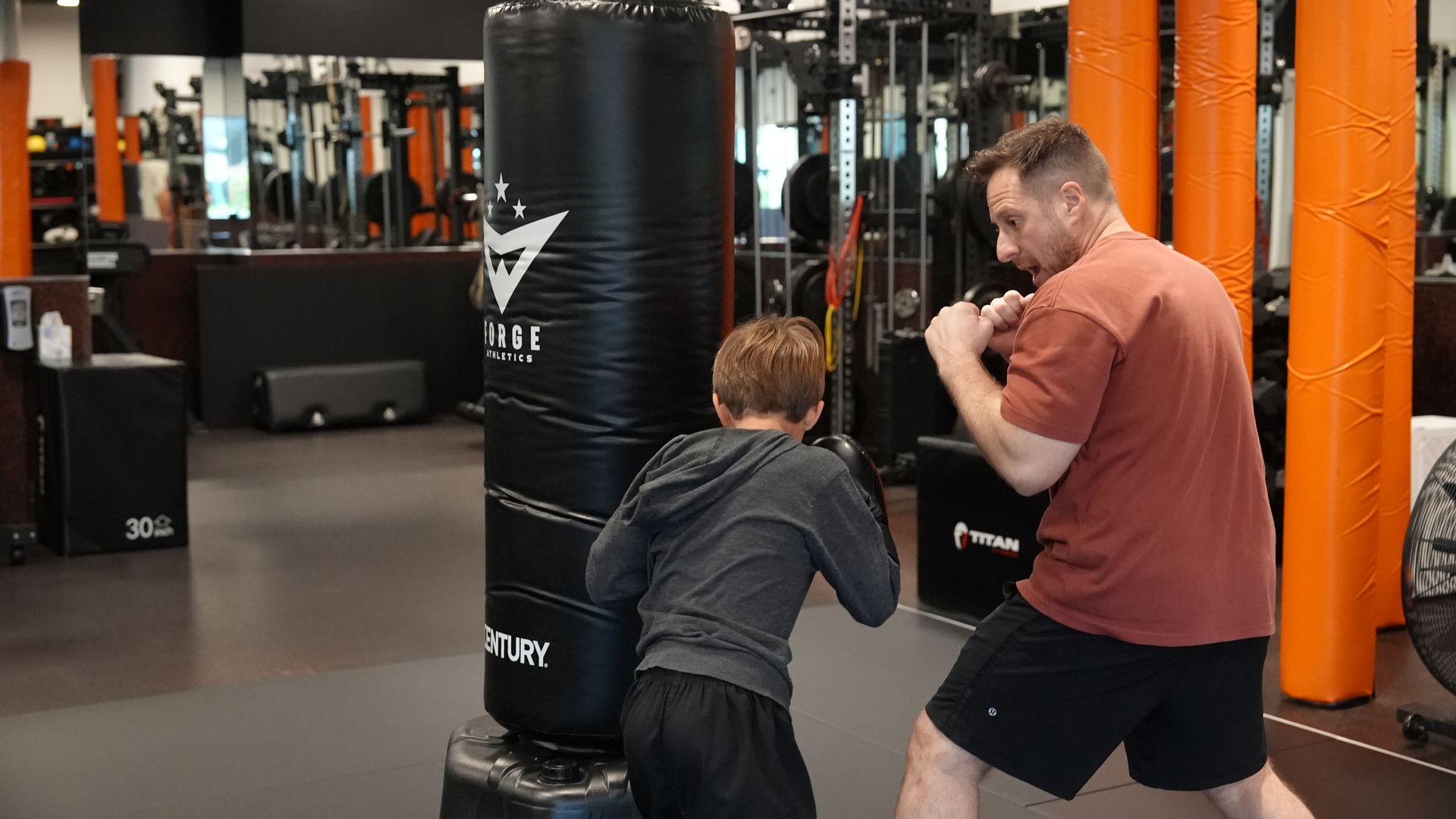
Some kids thrive in a class. Others need an hour that is entirely theirs: a coach who knows their sport, their goals, and exactly where they are today. Kids and teen personal training at Forge is that hour, coached by professionals who specialize in youth fitness and understand how young bodies and minds actually develop.
Forge is one of the few Naples gyms with a dedicated kids and teens personal training program, and the only one that pairs it with real martial arts instruction.
Built around what your child needs
For young athletes in soccer, basketball, baseball, football, swimming and beyond: speed and agility drills, age-appropriate strength and conditioning, endurance building, and sport-specific skill work that shows up in their next game.
For kids and teens who want to stay active and healthy: engaging workouts, movement skills, and the habits that make fitness something they keep for life.
Goal setting, communication, and the self-assurance that comes from getting genuinely capable at something difficult, coached one on one.
Personal training pairs naturally with our kids martial arts and MMA classes: many young athletes do both. Placement is by age and development; ask us what fits your child.
Coaching made for growing athletes
Trainers who are certified professionals and specialize in youth fitness, so every workout is safe, effective and age-appropriate.
Every program is written for one child: their interests, their fitness level, their goals, adjusted as they grow.
Kids train in a positive environment where effort is celebrated, progress is noticed, and every session ends better than it started.
Rated Excellent on Google · read our reviews
What a Session Looks Like
Every program starts with an assessment, and every session starts with a check-in: sleep, school, soreness, and what practices or games happened that week. A kid who played three games over the weekend does not get Monday's plan unchanged.
From there the session has a shape. A dynamic warm-up built toward that day's work. A short block of trunk and bracing work that never gets cut for time: anti-rotation work and loaded carries, not sit-ups. Speed and landing work while the athlete is fresh, because stopping is taught before sprinting. Then strength, where difficulty comes from tempo, position and control before any load goes up. The session closes with the weak link the assessment found, and, when it fits, a race or scored challenge to see whether technique holds when the athlete gets excited, then a quick debrief with athlete and parent.
A common assessment finding: a young athlete who believes they need more speed actually cannot stop. They accelerate well, then leak that speed on every cut and plant. The first weeks fix landing and deceleration, and speed improves because they stop losing it.
The emphasis changes with age: seven to ten is coordination and movement variety, eleven to thirteen introduces real strength patterns through tempo and control while growth is watched closely, and fourteen and up can train structured blocks with proper loading. During a growth spurt, coaches reduce impact and jumping volume on purpose, because temporary clumsiness usually reflects growth, not regression.
"We coach the athlete in front of us that day, not the one on the printout."
What parents see at home
"His coach and trainer does a great job connecting with him so that there's a feeling of trust, excitement and belonging."
"He trains all ages including children of all ages. One on one and groups."
Rated Excellent on Google · read our reviews
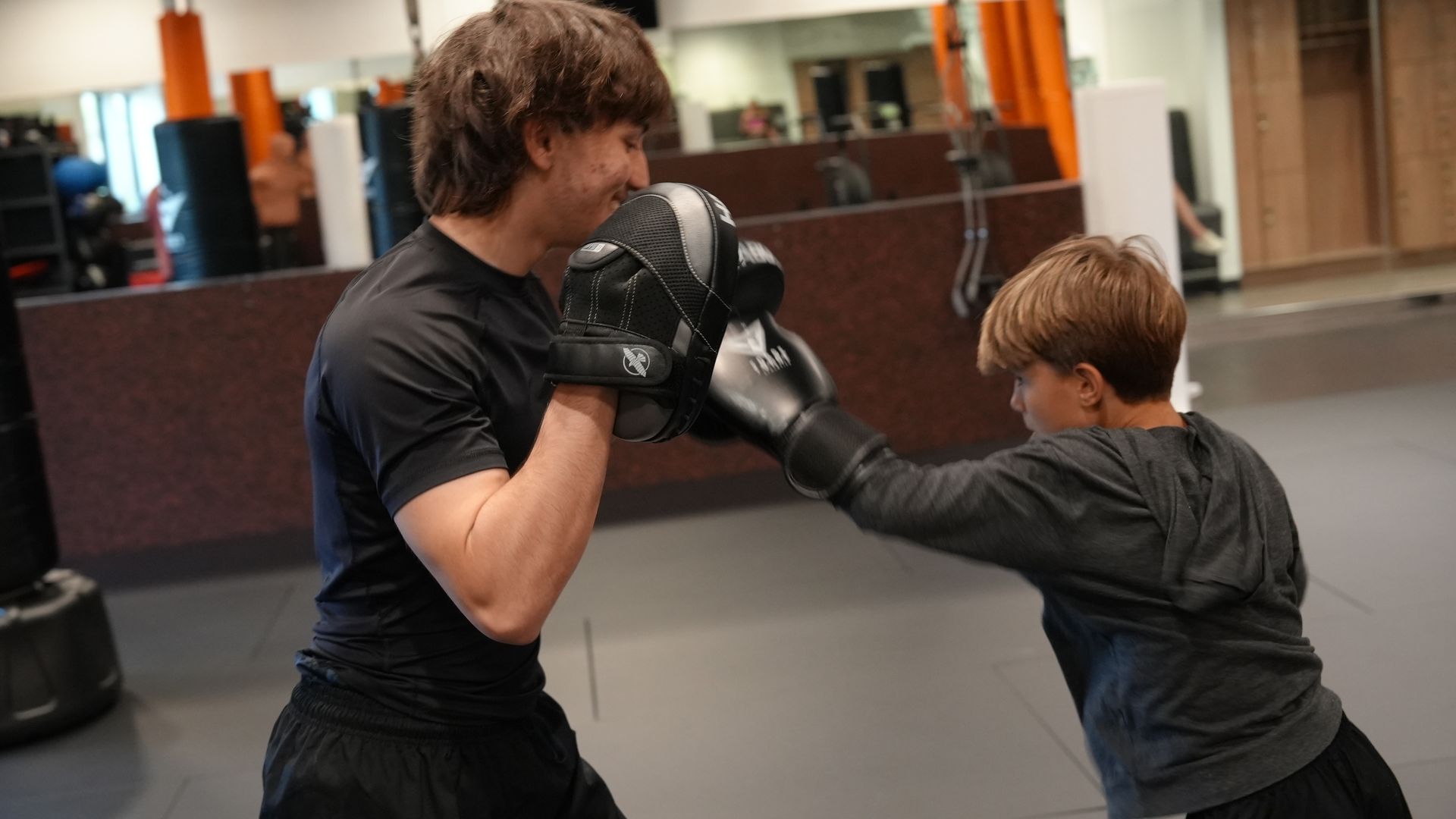
Parent questions
What happens after the free consultation?
Before we write your child's first session, we need to understand the athlete in front of us. We talk with you and your child about their sport, goals, training history, past injuries, and what their school, practice, and competition week actually looks like. Then we watch how they move. That gives us a clear starting point and helps us build the right program for your child instead of handing them a generic workout. Two athletes from the same team can have the same goal and still need completely different training.
What does a normal session look like?
We start every session by checking in with the athlete. We want to know how they slept, whether they are sore, what they did at practice, and whether they have a game or competition coming up. Those things matter. A young athlete coming off a tournament weekend should not be trained exactly like one who is fresh.
From there, we take them through a warm-up built around that day's training. We work on core strength and body control, then speed, landing, stopping, and reacting while they are still fresh. Strength work follows, with an emphasis on good positions, controlled movement, and proper technique. We also spend time on the specific weakness we found during their assessment. When it fits, we finish with a short challenge. Before they leave, we explain what they worked on, why it matters, and how it connects to their sport or goal.
My child just needs to get faster. Can you help with that?
Yes, but first we need to find out where your child is actually losing speed. A lot of young athletes can accelerate just fine. The problem shows up when they have to stop, plant, or change direction. If they cannot control the landing or decelerate cleanly, they leak speed on every cut.
When that is what we find, the first few weeks may focus more on landing and deceleration than sprinting. As they learn to stop and control their body, the speed starts to show up because they are no longer leaking it. We would rather assess your child in front of you and show you what we find than assume their problem is the same as someone else's.
Is strength training safe for a growing child?
Strength training can be appropriate for a growing athlete when it is properly coached and scaled to that child. We do not start by seeing how much weight they can lift. We start by teaching them how to control their body, hold good positions, and perform each movement correctly.
We can make an exercise challenging by slowing it down, adding a pause, improving the range of motion, or asking the athlete to maintain control before we ever add much weight. We also pay attention to growth spurts, soreness, sport practices, and competition demands. The goal is to build a stronger, more capable athlete without treating a growing child like a smaller version of an adult.
What ages do you work with?
We generally work with young athletes from about age 7 through age 18. Age is only one part of deciding what training should look like. We also consider the child's maturity, training experience, sport, goals, and current stage of growth. The consultation helps us understand where your child is and what kind of coaching will serve them best.
Start with a free consultation
Meet the coach, talk through your child's goals, and see the room before anything is scheduled.